Project Glasswing Is a Cybersecurity Story. A Conversation Designer Reads It Differently.
 By Christi AkinwumiMay 20, 2026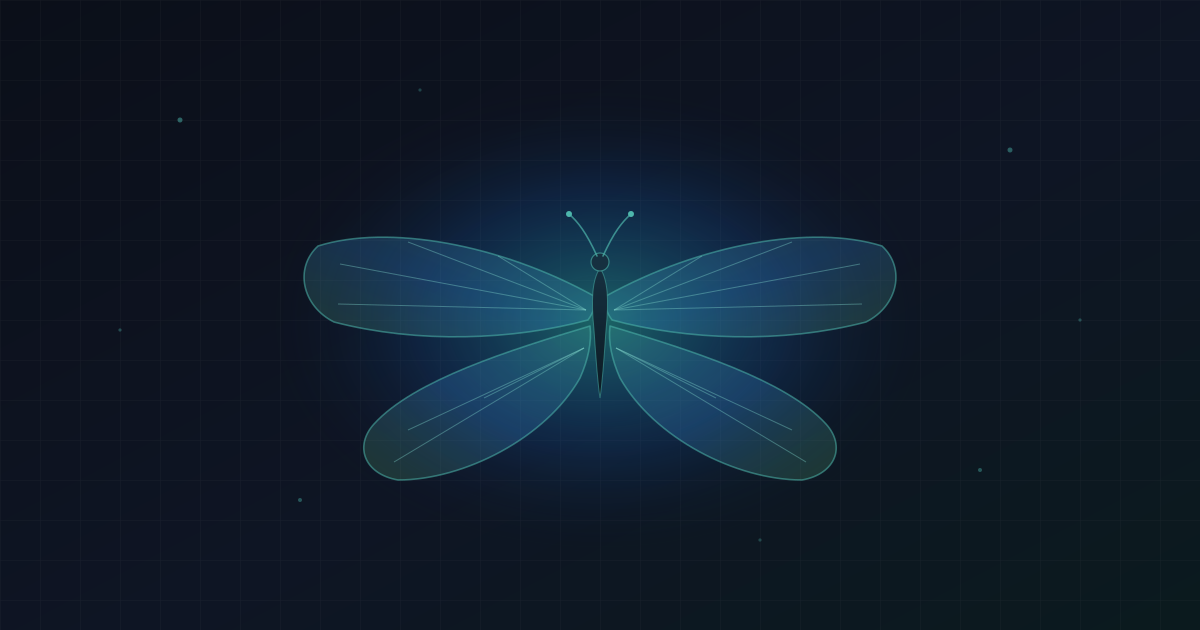
In this article
Anthropic named its new security project after a butterfly. The glasswing butterfly has clear, see-through wings. It hides in plain sight, and it stays out of harm’s way. That is an odd name for a project about hacking. It is also a perfect one.
Most people will read Project Glasswing as a cybersecurity story. It is one. But I design conversations for a living. So I read it a little differently. I see a story about words. I see a careful choice about how you talk to people when you are holding something powerful and a little scary. That is my job too, just at a much smaller scale.
So here is what I notice while everyone else stares at the hacking.
What Project Glasswing Actually Is
Project Glasswing is a new effort to protect the world’s most important software. Anthropic is leading it. The partners read like a roll call of big tech and big finance. Amazon Web Services, Apple, Google, Microsoft, and NVIDIA are in. So are Cisco, CrowdStrike, Broadcom, and Palo Alto Networks. JPMorganChase and the Linux Foundation round it out.
The reason for all this is one model. It is called Claude Mythos Preview. Anthropic has not released it to the public. But it can read code and find flaws better than almost any human alive. In just a few weeks, it found thousands of serious bugs. Some were hiding inside major operating systems and web browsers.
One example stopped me cold. The model found a flaw in OpenBSD that had gone unnoticed for 27 years. OpenBSD has a reputation as one of the safest systems in the world. Another bug had sat inside FFmpeg, the video tool used by countless apps, for 16 years. Testing tools had run past that exact line of code five million times and never caught it. The model spotted it on its own.
The worry is simple. If a model this good can find these holes, the wrong people can too, once the tech spreads. So Anthropic is trying to get ahead of that. It is handing the model to defenders first. It is also putting up to $100 million in usage credits and several million in donations behind the work. Anthropic says it will not make Mythos widely available, and it points to its Responsible Scaling Policy as the rulebook for moving this carefully. I dug into the model itself in an earlier piece on Claude Mythos.
I Read the Names Before the Numbers
Everyone is talking about the benchmark scores. I keep coming back to the names.
Start with the model. It is called Mythos. That word comes from ancient Greek. It means a story, or a thing that is spoken. Anthropic spells it out in a footnote. A mythos, it says, is “the system of stories through which civilizations made sense of the world.” That is a bold name for a piece of software. It quietly says: this thing helps shape how we live now.
Then there is the project name, Glasswing. The butterfly’s clear wings do two jobs. They let it hide. And they keep it safe by letting light pass right through. Anthropic says the bugs are like those hidden wings. The see-through part is the openness they want to copy.
Names like these are not an accident. Someone chose them with great care. As a conversation designer, this is the first thing I notice about any AI product. Before a single person reads a single reply, the name has already set a mood. “Mythos” feels grand and a little larger than life. “Glasswing” feels gentle and honest. Put them together, and a model that could break the internet suddenly feels safe to hand over.
That is not a trick. It is craft. And it is the same craft that decides whether your customers trust the AI you put in front of them.
The Announcement Is One Big Reframe
Read the announcement again and watch the moves it makes.
First it scares you. It says AI can now out-hack almost every human. It says the damage could hit banks, hospitals, and power grids. It reminds you that cybercrime already costs the world around $500 billion a year.
Then, fast, it calms you down. The same skill that finds holes can also fix them. So the good guys get the model first. The work is shared in the open. Trusted partners are at the table from day one.
That is a reframe. Name the fear, then point to the safe path. I see this exact move in good conversation design all the time. A strong support bot does not just say “I can’t do that.” It says, “I can’t reset your password here, but I can send you a secure link that will.” Same facts. Very different feeling.
Anthropic is doing that at a global scale. It is taking the scariest AI story of the year and walking you, step by step, toward calm. Whether you find it convincing is your call. But the shape of it is worth studying, because it works.
Ten years ago, the DARPA Cyber Grand Challenge showed machines finding and patching bugs with no human help. Back then it felt like a science fair. Now it is a $100 million industry project with the biggest names in tech. The technology grew up. The way we talk about it has to grow up too.
Why This Matters If Your AI Talks to Customers
You might think none of this touches your support bot or your help center. It does, in two ways.
First, your talking AI is now a door. If a model can pick apart code, people can also poke at the AI agents you put on your website. They can try to trick a chatbot into leaking data or doing things it should never do. That friendly helper on your contact page is part of what security folks call your attack surface. It used to be the IT team’s worry. Now it belongs to the people who design the conversation too.
Second, and this is the part I love, the Glasswing mindset is a great way to think about conversations. Glasswing hunts for the weak spots in code before an attacker does. You can do the very same thing with your customer chats. Go read your own transcripts. Find the spot where every frustrated customer gives up. Find the question your bot always fumbles. Those are your weak spots. Fix them before they cost you a sale.
This is not some far-off idea. It is a Tuesday. I laid out how to run that kind of check in a 30-minute AI CX audit. And I explained why the words, not the model, are usually the broken part in your chatbot’s real problem.
The Real Lesson Hiding in Plain Sight
Here is my honest opinion, said plain.
The model is the easy part. It already works. The hard part is the same as it has always been. How do you talk to people about something powerful so they trust you with it? It is the same idea I raised when KPMG handed Claude to 276,000 people. Anthropic spent real care on the names, the framing, and the openness. That care is why the news landed as “here is help” instead of “here is a weapon.”
The glasswing butterfly survives by being seen through. That is the quiet point of the whole thing. Openness is not a soft, nice-to-have value. It is a survival move. The same is true for the AI you put in front of customers. When your bot is honest about what it is and what it cannot do, people trust it more, not less. I made that case in why AI disclosure matters, and I believe it more today than I did then.
So yes, read Project Glasswing as a security story. It is a big one. Just do not miss the other story sitting right next to it. The one about words, trust, and the care it takes to hand someone something powerful. That story is not only Anthropic’s. It is yours too, every single time your AI opens its mouth.
If your AI talks to customers, and you are not sure what it is quietly telling them about your brand, that is exactly the kind of thing ICX helps teams sort out. I am always happy to talk it through, so feel free to reach out. There is more coming on this theme soon, so it is worth checking back.
Frequently asked questions
What is Project Glasswing?
Project Glasswing is an industry effort led by Anthropic to secure the world's most critical software. Launch partners include Amazon Web Services, Apple, Cisco, CrowdStrike, Google, JPMorganChase, the Linux Foundation, Microsoft, NVIDIA, and Palo Alto Networks. They are using a powerful Anthropic model called Claude Mythos Preview to find and fix software flaws before attackers can use them.
What is Claude Mythos Preview?
Claude Mythos Preview is an unreleased Anthropic model built for advanced coding and reasoning. It can find and exploit software flaws better than almost any human expert. In a few weeks it found thousands of serious bugs, including some that had been hiding for decades in major operating systems and web browsers. Anthropic does not plan to release it to the general public.
Why does Project Glasswing matter for businesses that use AI?
Two reasons. The same skills that let a model fix code can let bad actors attack it, so the AI tools you deploy are now part of your security picture. And the project's defend-first mindset is a smart model for any team: find the weak spots in your own systems, and your own customer conversations, before someone else does.
What can conversation designers learn from Project Glasswing?
That framing and trust are everything. Anthropic wrapped a frightening capability in careful names and an open, defense-first story, and that is why the news landed as help instead of a threat. The same care decides whether your customers trust the AI you put in front of them. The words do the heavy lifting.
Get an email when we publish a new post.