The AI Engineering Maturity Model (Five Names From Prompts to Graphs)
 By Christi AkinwumiJuly 28, 2026
In this article
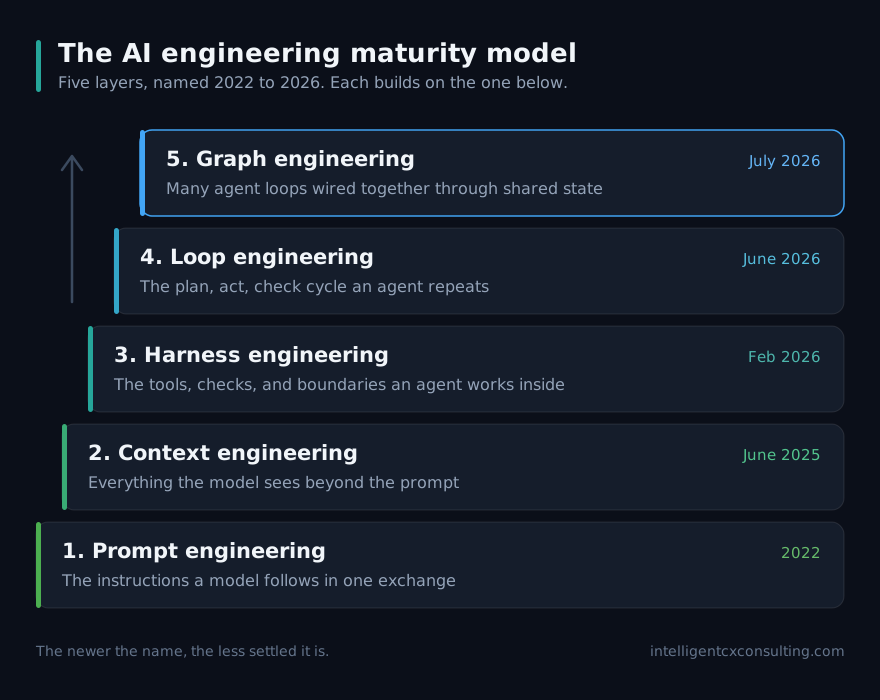
The AI industry has produced five engineering terms in four years. Prompt engineering arrived with ChatGPT in 2022. Context engineering was named in June 2025. Harness engineering followed in February 2026, loop engineering in June 2026, and graph engineering only weeks ago, in July 2026. If the churn feels like marketing, some of it is. But something real sits underneath the naming contest. AI systems went from answering questions to doing work. Every new name marks a layer of engineering that was added along the way.
Read the five terms as a maturity model. Teams adopt these layers in roughly this order, and each one builds on the last, the same way conversational AI matures from scripted to adaptive. This post explains each layer in plain language, with dates and sources, and gives an honest read on which names will last. It is written for the business leader who keeps seeing these words in vendor decks and job posts. Here is what actually changed.
Why does AI engineering keep getting new names?
Because the job kept growing. In 2022, working with AI meant writing a good instruction and reading the answer. By 2026, it means running software agents that plan, use tools, check their own work, and hand tasks to each other. Each expansion created new work, and new work attracts new names.
Not every name deserves equal weight, though. Some were coined by respected engineers describing real practice. Others rode a viral post and a wave of lookalike explainer content within days. The difference matters if you are hiring, buying, or planning around these words. So each section below says who coined the term, who adopted it, and who pushed back. Stages make useful maps, as long as you remember the map is not the territory.
What is prompt engineering? (2022)
Prompt engineering is designing the instructions a model follows in a single exchange. It is the oldest layer and the one most people know. It is also regularly declared dead, and the obituary keeps being wrong. Casual prompting got easy. Production prompt work, meaning versioned and tested instructions that hold up across thousands of conversations, got more important. ICX has a full plain-language guide to prompt engineering and a set of techniques that hold up in production.
What is context engineering? (June 2025)
Context engineering is managing everything the model sees beyond the prompt: retrieved documents, conversation history, tool results, and business data. The goal is assembling enough of the right information that the task is actually solvable. Shopify CEO Tobi Lutke popularized the term in June 2025, and Andrej Karpathy endorsed it days later. Anthropic later published a formal guide to the discipline. Of the five terms, this one has the strongest institutional footing.
It also matters most for customer experience. When an AI assistant gives a wrong answer, the cause is usually not the model. It is stale, missing, or badly organized context. ICX wrote about why context engineering is the missing infrastructure layer for enterprise AI.
What is harness engineering? (February 2026)
Harness engineering is building the structure an agent works inside. That covers which tools it can use, what checks run on its output, what it may do alone, and where it must stop. Engineer Mitchell Hashimoto coined the term in February 2026, admitting no industry-accepted word existed yet. Within weeks, OpenAI used it in its own engineering publication and Thoughtworks published a serious treatment on martinfowler.com. That is fast, credible adoption for a young term.
For a business, the harness is the difference between an AI that helps and an AI that acts without limits. If you have read ICX on agentic AI readiness, the harness is where those readiness questions become working software. Permissions, approvals, and escalation get built in rather than hoped for.
What is loop engineering? (June 2026)
Loop engineering is designing the cycle an agent repeats: plan, act, check the result, and go again until the goal is met or a stopping rule fires. Developer Peter Steinberger sparked the term with a viral June 2026 post. His argument: stop prompting agents, start designing their loops. Google’s Addy Osmani named and structured the idea in a piece later republished by O’Reilly.
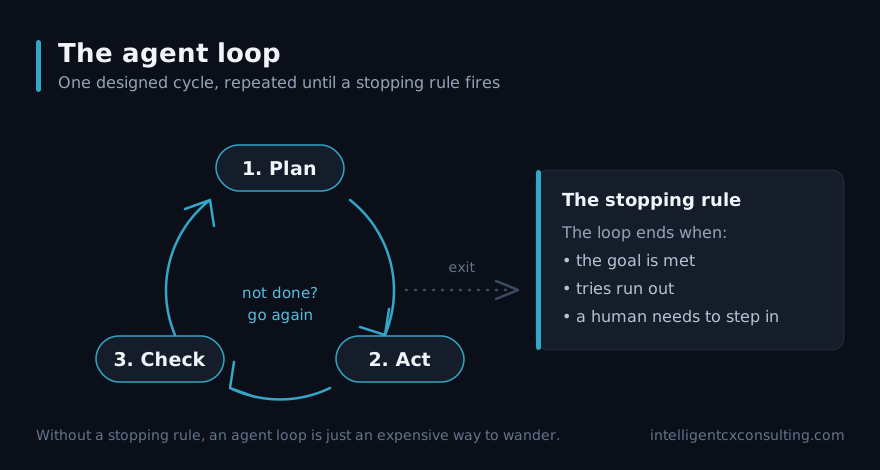
The pushback is worth hearing too. Critics on developer forums argue an agent loop is a decades-old software pattern with a new label. Both things can be true: the pattern is old, and applying it well to AI agents is new work. ICX wrote a beginner’s guide to loop engineering that stays on the practical side of that debate.
What is graph engineering? (July 2026)
Graph engineering, in this new usage, means wiring multiple agent loops together through shared state. Complex work follows explicit steps and defined handoffs instead of one long conversation. The term is roughly three weeks old. It appeared in an early July 2026 essay by Josh Simmons and went viral in mid-July.
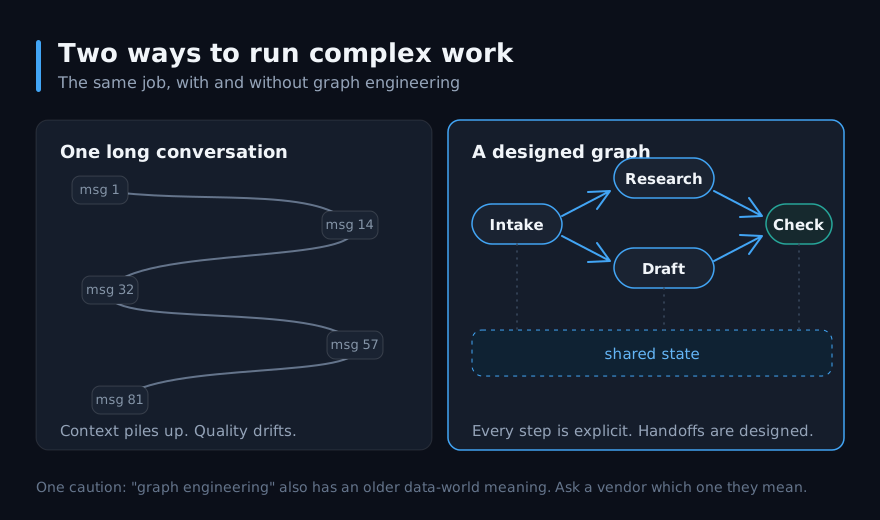
Here is the honest part. LangChain builds LangGraph, the best-known tool for exactly this work. Its response: the practice is about three years old and only the name is new. One caution for searchers. “Graph engineering” also has an older, unrelated meaning in the data world, building knowledge graphs and graph databases. If a vendor uses the term, ask which one they mean. For when multiple agents actually beat one, ICX covered the tradeoffs in when to use multi-agent systems.
Which of these names will last?
ICX’s read is based on who adopted each term and how fast. Context engineering is here to stay, because frontier labs treat it as a discipline. Harness engineering looks durable, because credible institutions adopted it within weeks for work that genuinely lacked a name. Loop engineering and graph engineering describe real practices, but as names they are contested. The strongest technical voices in the graph conversation say the label adds vocabulary, not capability.
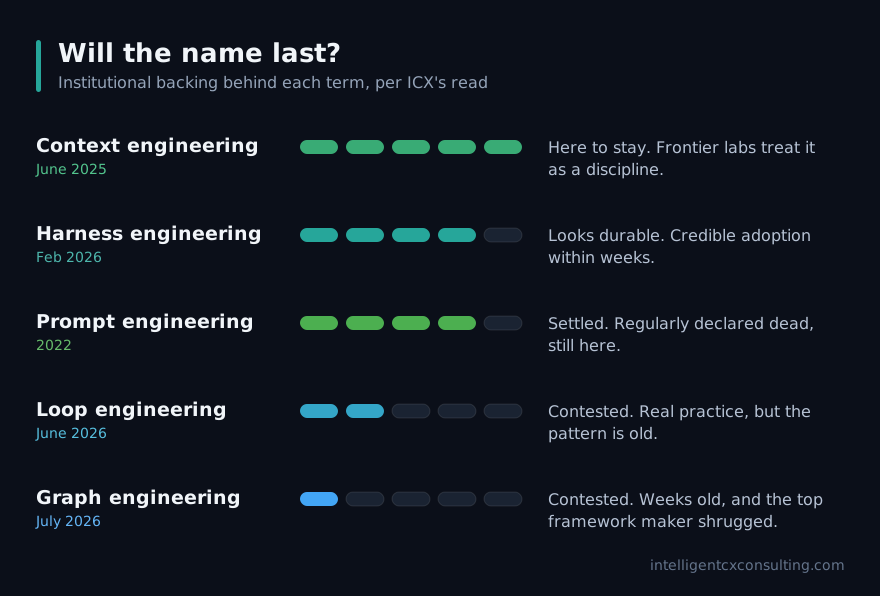
The safe posture: treat the layers as real and the labels as provisional. A team that understands context, structure, cycles, and orchestration will be fine whatever the words become.
What should a business leader do with this?
Do not hire by buzzword, and do not let a vendor sell you a layer you do not need. Use the mapping instead. Wrong answers point to context. Unsafe behavior points to the harness. Stalled multi-step work points to loops. Many moving parts point to graphs. And if the AI talks to customers, conversation design comes before all of it. No orchestration layer fixes a conversation nobody designed.
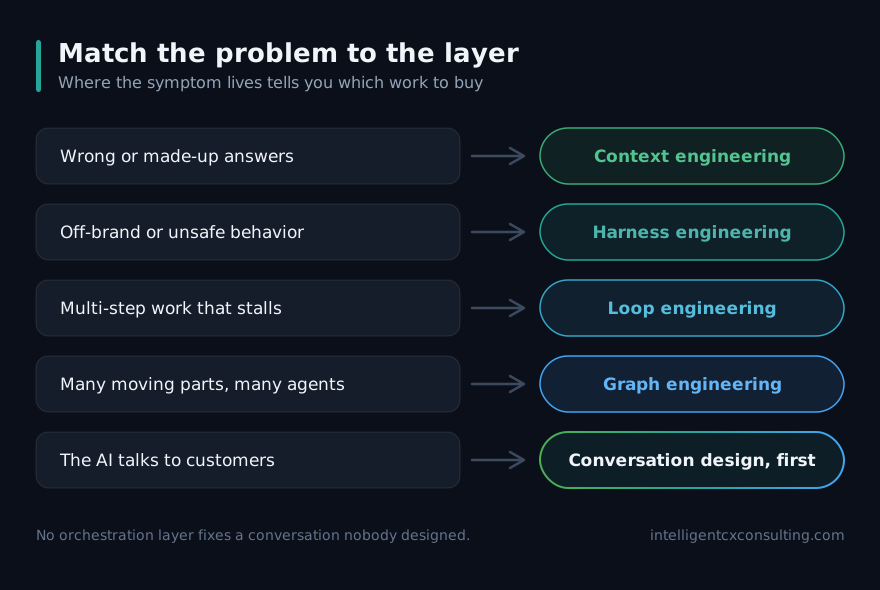
If you want a second set of eyes on where your AI problems actually live, see the ICX services or get in touch. Mapping a problem to the right layer is usually a short conversation, and it saves months of building the wrong thing.
How ICX verified this post
Facts were checked on July 27, 2026. Term origins trace to the primary sources linked inline. Those include Tobi Lutke’s June 2025 post, Anthropic’s context engineering guide, Mitchell Hashimoto’s February 2026 essay, Addy Osmani’s loop engineering piece, Josh Simmons’s July 2026 essay, and LangChain’s July 22, 2026 response.
Two flags. OpenAI’s February 2026 harness engineering post is cited by multiple outlets, but ICX could not load the original page directly. This post references the fact of its publication rather than quoting it. Reported view counts for the viral posts vary by source, so this post calls them viral without citing exact numbers. Search demand for the newer terms could not be verified with query data, and no claim about it is made here.
ICX drafts with AI assistance and reviews every post before it goes live. Read the full policy on the AI disclaimer page. If a term’s status changes, this post gets updated and the date at the top reflects it.
Frequently asked questions
What is graph engineering in AI?
Graph engineering means connecting multiple AI agent loops through shared state. Complex work flows through explicit steps instead of one long conversation. The term went viral in July 2026, but LangChain, maker of the best-known graph framework, says the practice is about three years old. The name is new. The work is not.
What is harness engineering?
Harness engineering is building the structure an AI agent works inside. That means the tools it can use, the checks on its output, and the boundaries that keep it safe. Engineer Mitchell Hashimoto coined the term in February 2026. OpenAI and Thoughtworks began using it within weeks.
What is loop engineering?
Loop engineering is designing the repeating cycle an AI agent runs: plan, act, check the result, and go again until the goal is met. The term spread in June 2026 after a viral post by developer Peter Steinberger. Critics note the underlying pattern is a long-standing software concept.
What is the difference between prompt engineering and context engineering?
Prompt engineering writes the instructions for a single exchange. Context engineering manages everything else the model sees: documents, history, retrieved data, and tool results. Shopify CEO Tobi Lutke popularized the term in June 2025. Anthropic later formalized it as a discipline.
Are these AI engineering terms real disciplines or just hype?
Mixed. The layers of work are all real. Context engineering and harness engineering have credible institutional adoption. Loop engineering and graph engineering describe real practices but face pushback as new names for established ideas. Judge the work, not the label.
Which AI engineering skills should a business team learn first?
Start where your problems live. If AI answers are wrong, that is usually context. If an AI tool acts unsafely, that is the harness. If work needs many steps, that is loops and graphs. Most customer-facing problems trace to context and conversation design before anything else.
Get an email when we publish a new post.